command line interface
Your whole agent stack, from the terminal you already live in.
Waxell CLI is a command-line interface for observing and operating AI agent systems in production. Execution state, telemetry, governance controls, and the testing framework — all in one terminal session, live against the runtime, no dashboard switching. And the CLI is governed like every other interface: every action runs through the same policies, budgets, and approval rules.
A real session
An execution fails in production. You never leave the terminal.
Pull the record, see which policy fired and why, replay with adjusted parameters, push the fix — one session, current state, no stale dashboard data retrieved after the fact.
THE PROBLEM
The information you need to debug an agent isn't missing — it's in four different places, and one of them is always stale. Engineers move between terminals, dashboards, logs, and internal tools to understand behavior and make changes, operating on partial or out-of-date information. The CLI collapses those surfaces into one interface that's live against the runtime itself.
LIVE AGAINST THE RUNTIME
Observe running agents, inspect recent executions, view telemetry, and trace decision paths in real time — from your development environment, not a separate dashboard. What you see is the current state of the system.
GOVERNED, NOT A BACKDOOR
Every CLI action is subject to the same policies, budgets, and approval rules as every other interface. Kill-switches, halts, and config changes flow through the governance plane. Operational convenience never becomes an implicit bypass.
TEST AND ITERATE IN PLACE
Run local or remote test executions, inspect structured results, replay scenarios, and compare behavior across versions — without switching tools. Test outcomes are recorded as first-class telemetry.
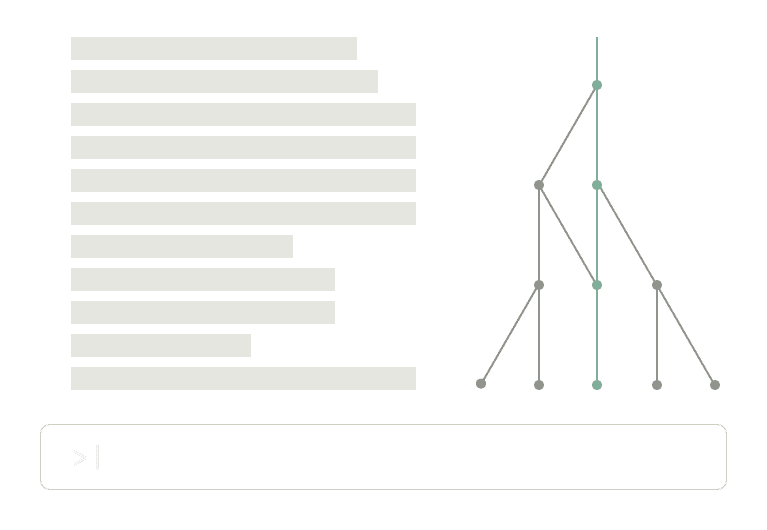
Built for production, not just speed
Most dev tools optimize for speed in isolation and become liabilities the moment the system they touch is in production. The Waxell CLI keeps iteration fast without loosening the controls production depends on: live state is visible, governance actions are available, and every operation runs through the same constraints as the rest of the system. Agent creation and migration are available here too, through the Agent Composer integration — intent to deploy, in the same governed surface.


POLICY A
POLICY B
POLICY C
POLICY D
Designed to scale