
assurance
Operating autonomous systems safely
Waxell Assurance is the governance and compliance layer for AI agents in production — the principles and enforcement mechanisms that ensure autonomous systems operate within defined boundaries, remain fully auditable, and behave predictably even as their underlying logic changes.
Agentic systems introduce a new class of operational risk.
They act continuously, make decisions without human supervision, and interact directly with production data and tools. Failures are harder to predict, harder to detect, and more expensive to correct than traditional software errors.
Waxell exists to make autonomous systems operable in real business environments rather than merely executable. 50+ policy categories. Enforced at runtime, across every agent, every execution.
FreE during beta.
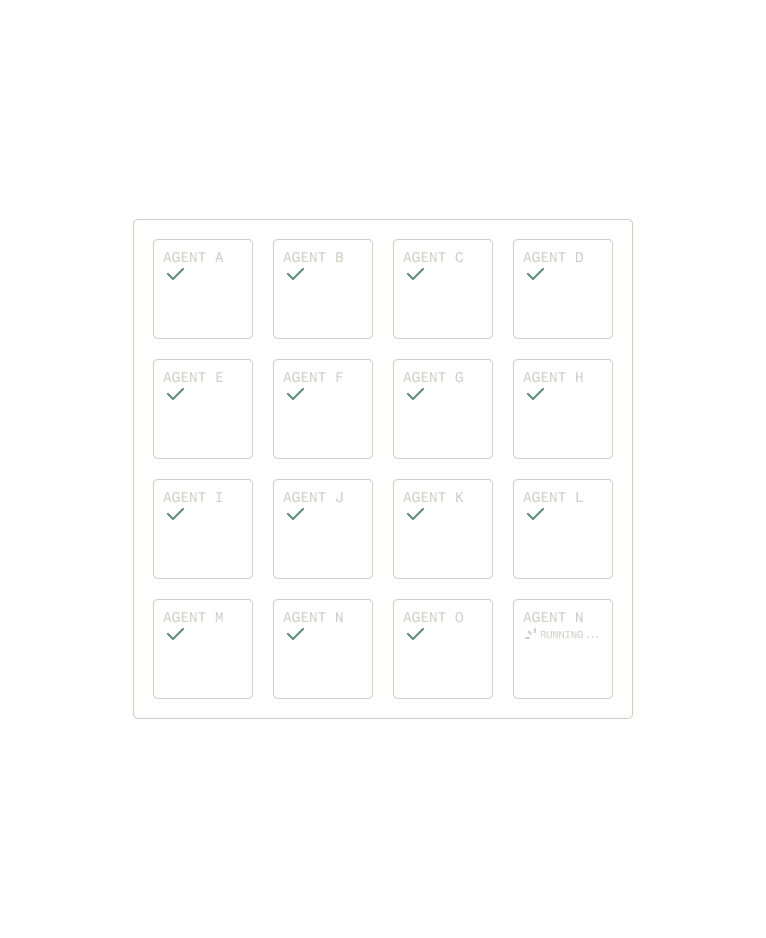
Governance is not treated as an overlay or an afterthought in Waxell.
Rules, limits, and oversight exist independently of any single agent, workflow, or integration. This separation allows agent behavior to evolve while control remains stable.
These guarantees are enforced across Waxell’s core system surfaces, including the Registry, Policies, Budgets, Telemetry, and controlled execution interfaces.
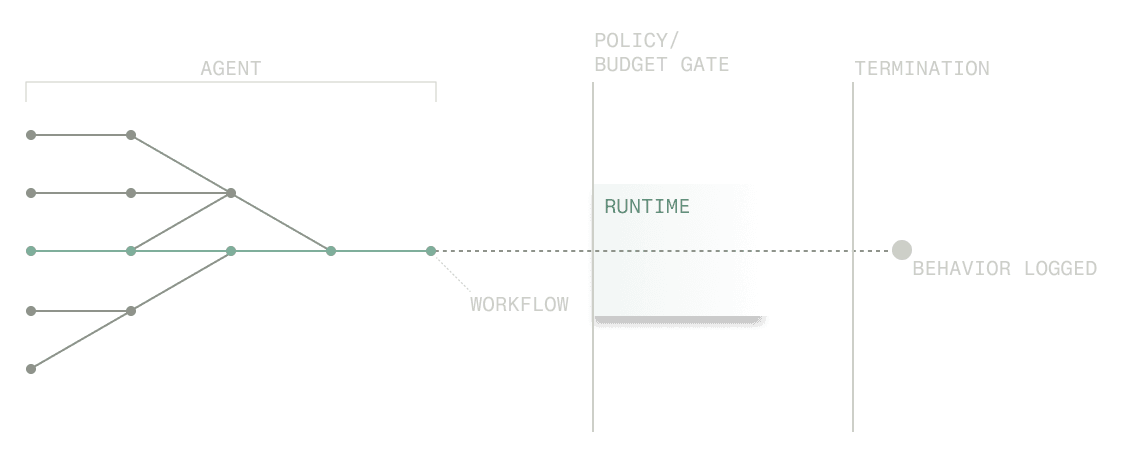
Safety in Waxell does not come from limiting what systems can do.
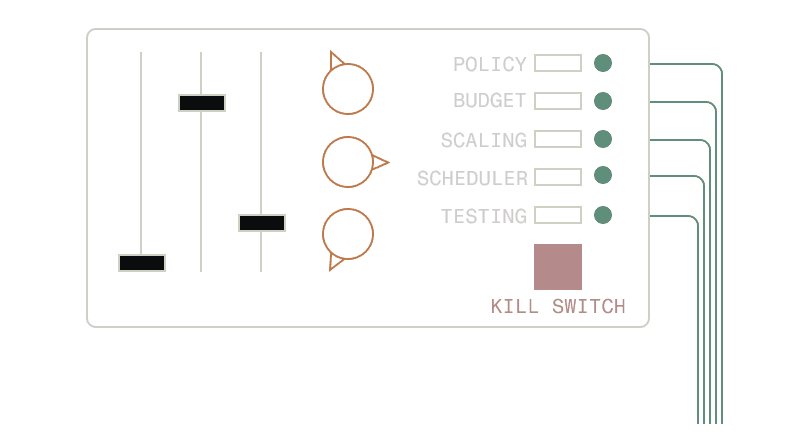
Safety in Waxell comes from defining what agents are allowed to do, under what conditions, and within what limits. Policies constrain actions. Budgets constrain cost and resource usage. Without hard budget limits, a four-agent loop can burn $47,000 in 11 days unnoticed — here's what enforcement (not monitoring) actually stops. Kill-switches provide immediate intervention when boundaries are exceeded.
This constraint model allows teams to expand autonomy deliberately without sacrificing predictability or control.
How Does Waxell Make Agent Behavior Auditable?
Every execution governed by Waxell is recorded with sufficient context to understand what occurred and why.
Telemetry and test executions are treated as first-class records, not auxiliary logs. Execution paths, resource usage, and decision points are preserved in a durable, inspectable form.
Auditability is a property of how the system operates, not a separate reporting feature.
Every execution governed by Waxell is recorded with full context — decision points, resource usage, and policy evaluations — in a durable, inspectable form.
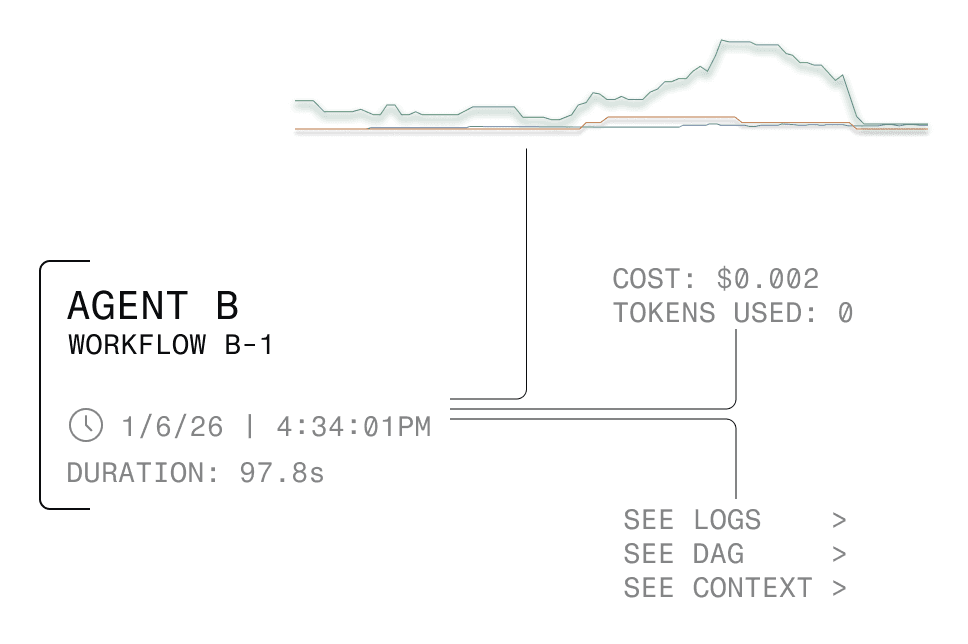
Visibility without implicit control
Waxell provides continuous visibility into how agentic systems are behaving as they run.
Waxell's visibility is designed to support oversight rather than intervention. Teams can observe patterns, detect drift, and understand system state without altering execution or introducing new risk.
Visibility is exposed through read-only surfaces, including the CLI, without creating implicit control paths.
Who Controls What in a Waxell Deployment?
Waxell enforces a separation between development authority and operational authority.
Developers compose and refine agents. Operators govern limits, policies, and system behavior once agents enter production. These roles are supported by different control surfaces and are not interchangeable.
Waxell is designed so that operational teams can manage limits, policies, and system behavior directly once agents enter production, without relying on ongoing engineering involvement.
How Does Waxell Handle Agent Access and Security?
Waxell is designed to operate within standard enterprise security expectations.
Access is controlled through explicit permissions and capability-scoped interfaces. Actions are constrained by policy. All data ingress and action execution occurs through defined system boundaries and is logged automatically.
Waxell does not require privileged access beyond what is necessary to operate governed workflows, and it does not obscure or bypass existing security controls. This includes MCP. Waxell's native support for Model Context Protocol means every tool your agents access through MCP is subject to the same policy enforcement, audit trail, and capability controls as direct API calls.
Predictable behavior across change
Designed for operational trust
Waxell is intentionally unglamorous in its behavior.
It prioritizes predictability over cleverness, visibility over opacity, and constraint over improvisation. It exists to support teams who must run autonomous systems reliably over long periods of time.
We build this way because we are operators first. AI is only useful when it serves the needs of the business, not the other way around.
