TELEMETRY
Waxell Telemetry is a read-only observability layer for agentic systems — capturing traces, spans, model calls, token usage, and latency across every execution without participating in governance or altering system state
What It Is
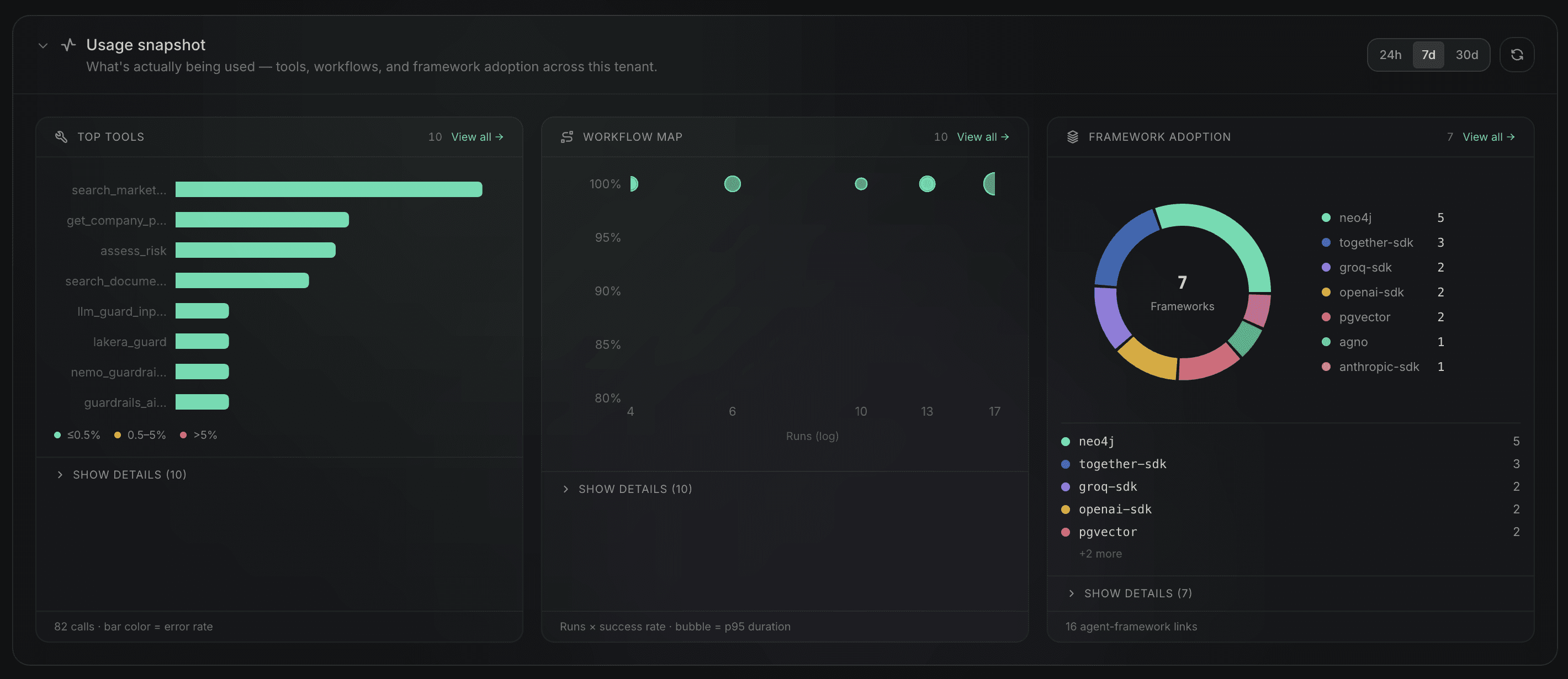
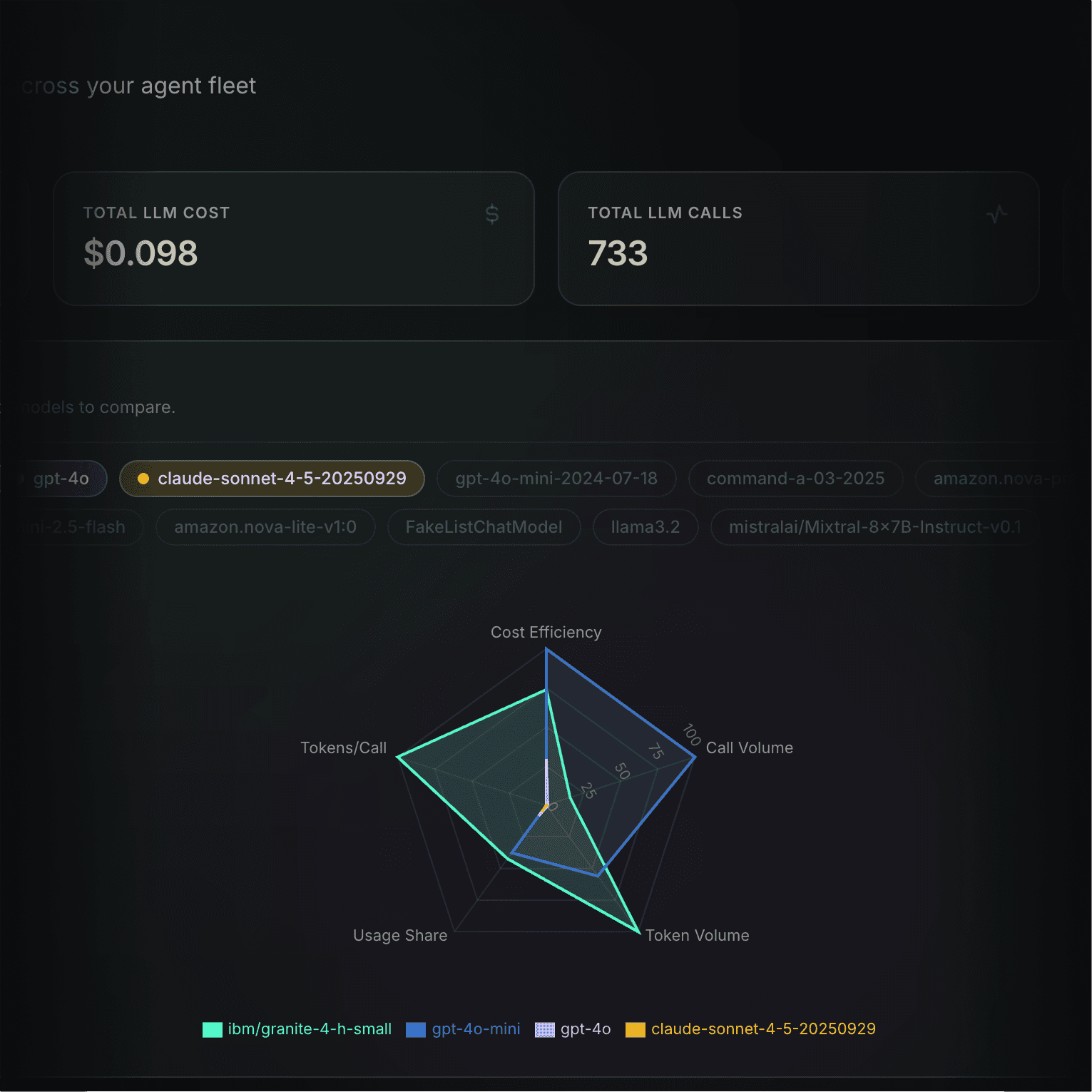
A structured, immutable record of what agentic systems did as they ran. Traces and spans across workflow steps. Model calls with input and output context. Token usage per call. Latency per execution step. Governance evaluation points where policies and budgets were checked.
Captured automatically from the moment you add Waxell Observe. Two lines of Python. No changes to agent logic.
READ ONLY BY DESIGN
Telemetry is immutable: once recorded, it cannot be altered — ensuring an unambiguous record for diagnosis, review, and audit.
EXPLAINING OUTCOMES
Telemetry records execution paths and decision context, enabling post-hoc analysis of outcomes without reconstructing intent or replaying logic.
VISIBILITY WITHOUT AUTHORITY
Telemetry allows continuous observation of system load and execution behavior without impacting running or future workflows.
Separated From Governance
Telemetry does not participate in enforcement, decision-making, or control. It cannot pause execution, override policy, or influence outcomes. No agent or workflow writes directly to telemetry stores.
Observing the system introduces no additional risk. For enforcement behavior — policies, budgets, kill-switch conditions — see Waxell Policies.
01
Initialize Waxell Observe.
Two lines of Python before your existing imports. No changes to agent logic, no redeployment needed.
02
Telemetry is captured automatically.
Every execution emits traces, spans, model calls, token counts, latency, and governance evaluation points — derived from canonical runtime events, not reconstructed after the fact.
03
Review in Waxell Observe.
Signals feed into the Observe dashboard and into execution records — the durable per-run artifacts available for review, diagnosis, and audit.